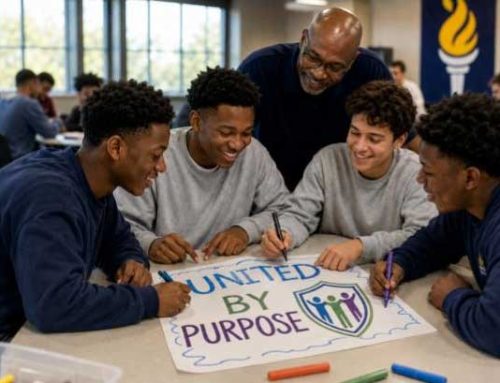
Mentoring That Sees the Individual
For decades, mentoring has been seen as a powerful answer for at-risk youth. The image is simple and hopeful: a caring adult walks alongside a young person, builds a positive relationship, and that relationship alone changes everything. And while relationship absolutely matters, research is showing us something important, mentoring is most effective when it goes beyond friendship and becomes intentional.
A major meta-analysis of 70 outcome studies involving more than 25,000 youth examined intergenerational, one-to-one mentoring programs over several decades. The findings were encouraging; mentoring does make a difference. Across academic, social, and emotional outcomes, youth in mentoring programs showed statistically significant improvement. However, the overall impact was described as moderate. In other words, mentoring works, but not automatically, and not equally in every case.
That insight is critical
Further research compared two different approaches to mentoring. The first was the traditional “non-specific friendship” model, the idea that if a mentor simply builds a strong, supportive relationship, positive change will follow. The second approach was more targeted and skills-based, meaning mentors intentionally worked on specific areas of need presented by the mentee, such as academic struggles, emotional regulation, decision-making, or social skills.
The results were striking. Targeted, skills-based mentoring programs produced effect sizes that were more than double those of non-specific relational approaches. In other words, when mentors intentionally addressed the real needs of the young person sitting in front of them, outcomes improved significantly across academic, psychological, and social functioning.
This is where Kairos Torch Mentoring stands apart
Kairos Torch is not a one-size-fits-all program. It does not assume that every young person in the juvenile system needs the same thing. It does not rely solely on the hope that a positive relationship will automatically fix deep-rooted challenges. Instead, it recognizes what research confirms, transformation happens when a caring relationship becomes the foundation for intentional growth.
Every mentee comes with a unique story. Some struggle with anger. Others battle shame. Some lack academic confidence. Others have never learned how to regulate their emotions or build healthy relationships. One youth may need help developing future goals. Another may need to process trauma. Treating these young people with a uniform, scripted approach would ignore their individuality and potentially limit their progress.
Kairos Torch mentors are trained to listen carefully, discern specific needs, and respond intentionally. The mentoring relationship becomes the context for targeted growth. If a youth struggles academically, the mentor
works on study habits and goal setting. If emotional regulation is an issue, the mentor models and teaches practical strategies. If identity and self-worth are fractured, the mentor speaks truth, purpose, and stability into that space.
The relationship is the vehicle, but intentional development is the direction
This is also why the Kairos Torch Mentor’s Guide is so intentional in its design. The curriculum was not created as a rigid script to be followed word for word. It was developed specifically to address the common and complex needs of incarcerated youth, identity confusion, shame, poor decision-making patterns, broken family systems, lack of future vision, emotional dysregulation, and spiritual disconnection. Each lesson is structured to open conversation, not close it. The questions are designed to draw out the heart of the mentee. The activities are meant to surface underlying needs. The discussions are crafted to help youth reflect, process, and discover truth for themselves.
Rather than handing a young person pre-packaged answers, the Mentor’s Guide equips the mentor to help the youth explore their own struggles and strengths and begin finding their own answers within a supportive and guided framework. The curriculum creates space for honest dialogue while giving mentors tools to intentionally address real developmental gaps. In this way, the Guide serves as both structure and flexibility, structure to ensure key areas of growth are covered, and flexibility to respond to the unique needs of each mentee.
Research also emphasizes the importance of mentor preparation. Programs that deploy mentors with helping backgrounds or specific training tend to see stronger results. Kairos Torch takes mentor preparation seriously. Mentors are not simply encouraged to “be a friend.” They are equipped to recognize needs, respond wisely, and remain consistent. The goal is not casual interaction; it is purposeful investment.
At the same time, Kairos Torch understands the realistic nature of mentoring outcomes. The research reminds us that mentoring programs generally yield modest effects overall. This humility is important. No program can undo years of trauma, neglect, or poor decision-making overnight. But when mentoring is intentional, targeted, and grounded in a genuine one-to-one relationship, the impact deepens.
Adolescence itself is a critical developmental period. The brain is still forming. Decision-making systems are still maturing. Emotional regulation is still developing. This means youth are both vulnerable and highly adaptable. A one-size-fits-all program misses this developmental complexity. Kairos Torch embraces it.
Each mentoring relationship becomes a customized journey
The mentor meets the mentee where they are, not where the curriculum assumes they should be. Growth is not forced into a rigid mold. Instead, the mentor asks: What does this young person need right now? What skills are missing? What wounds must be acknowledged? What strengths can be built?
This individualized approach reflects both sound developmental science and the heart of Kairos Torch. It honors the dignity of each youth as a person, not a case number. It recognizes that transformation is personal. And it acknowledges that effective mentoring is both relational and intentional.
Kairos Torch Mentoring is not a formula. It is a focused, one-to-one partnership designed to identify specific needs and address them with purpose. Research shows that when mentoring moves beyond general friendship and becomes targeted and skill-based, outcomes improve significantly.
In the end, real change does not happen because a program is uniform. It happens because a mentor sees the individual in front of them, and chooses to respond to that individual with wisdom, structure, compassion, and intentional guidance.
Categories
Tags